Castle Crag Loop, Borrowdale
England · Cumbria · 2.4 miles (round trip) · ~1 hr 5 min–1 hr 20 min (round trip)
Castle Crag
Castle Crag summit
The Hamer Memorial, Castle Crag
Castle Crag
Castle Crag
Castle Crag
Old slate quarry
The Cumbria Way in Borrowdale
Quarry on Castle Crag
Route and Terrain
This is a quintessential Lakeland mix. We encountered well-maintained village lanes leading into flat, lush riverside paths along the River Derwent, followed by a transition into woodland tracks. The climb up to the summit of Castle Crag involves a steeper, rocky ascent on a path made of loose slate chippings—be prepared for some crunching underfoot! While the main trails are clear, the detour to the cave takes you over uneven, rocky ground where sturdy footwear is essential. It’s not suitable for wheelchairs or pushchairs due to these rough, narrow, and sometimes slippery slate sections. The gradient gets significant as you near the summit, but the path is well-defined. We found the descent equally craggy, requiring careful foot placement, especially in wet conditions, but the overall experience is manageable for most walkers with a decent level of fitness.
Sights & Experiences
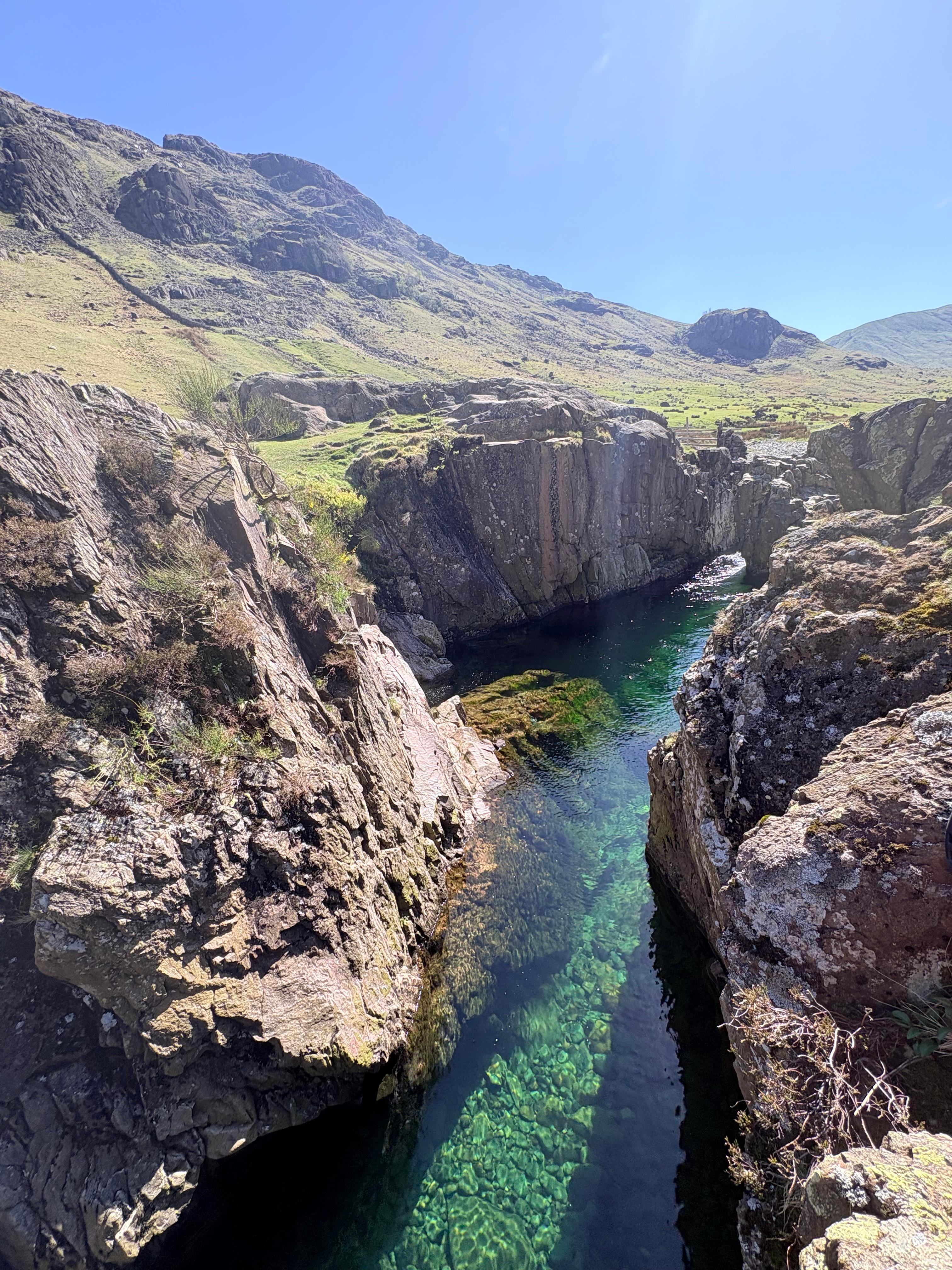
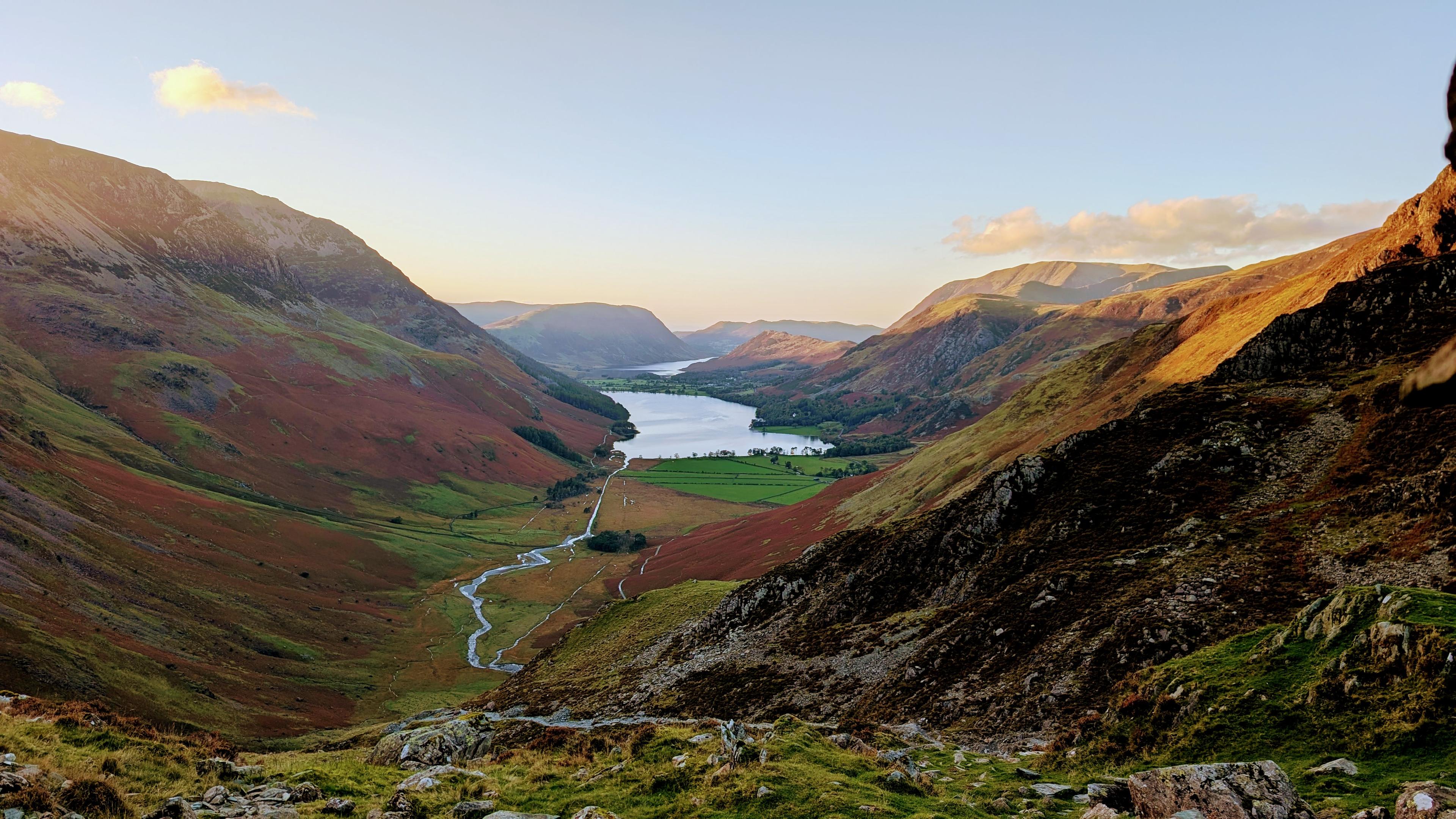
We absolutely loved the variety packed into this relatively short route. The River Derwent is a constant, calming companion at the start, offering peaceful spots and famous stepping stones that we couldn't resist playing on. Moving into the woodland, the area is draped in moss and ancient trees, leading you towards the abandoned slate quarries. The summit itself is a surreal, stark landscape of jagged slate, offering what we think are some of the finest views in the entire Lake District. You get a panoramic look down the valley towards Derwent Water, and a commanding view of the surrounding peaks like Glaramara and Scafell Pike. The most unique highlight is definitely the 'hidden' cave, an atmospheric relic of the early 20th century, tucked away on the fell’s flank amidst a quiet, shaded nook of the forest.
Hidden Gems
The true hidden gem is Millican Dalton’s Cave. It’s not just one spot; there are a few cave-like quarry hollows on the flank of Castle Crag, but the main one—once the summer home of the self-styled 'Professor of Adventure'—is a fascinating find. It’s tucked away in the trees, and we had to look closely at the fork in the path to ensure we were on the right trail. It feels like stepping into a secret chapter of local history.
History & Heritage
This walk is steeped in local colour. Castle Crag served as an ancient hillfort, and the remains of old slate mining are everywhere. The most charming history, however, belongs to Millican Dalton. In the early 1900s, he gave up his life as an insurance clerk to live in these very caves during the summer, becoming a legendary figure who guided climbers and lived a self-sufficient, eccentric life. Carved into the cave walls, you can still spot some of his philosophies.
Seasonal Changes & Best Time to Visit
The slate paths can become quite slippery after heavy rain, so we recommend extra caution in autumn and winter. Spring brings a stunning carpet of bluebells in the woodlands, and summer is ideal for cooling off by the river, though the summit can feel exposed on very windy days.
Parking & Public Transport
The primary parking for this walk is the National Trust Rosthwaite car park, which is a Pay & Display facility. It can fill up quite early during peak season, so arriving before 10 AM is a good strategy. Alternatively, the area is well-serviced by the Honister Rambler bus, which is a great stress-free way to reach the start point without worrying about car park capacity.

Safety & Preparation
The slate slopes are loose and can be tricky; wear boots with good grip. Carry an OS map (OL4) as signals can be patchy in the valley. If the River Derwent is high, avoid the stepping stones and use the nearby bridge to cross safely.
Difficulty & Alternatives
We’d rate this as a moderate walk. While the total height gain is modest compared to higher fells, the steep, rocky nature of the final ascent and the uneven, loose slate make it more demanding than a standard valley stroll. There are no technical scrambling sections, but the terrain is rough enough to keep you on your toes.
Insider Tip
Don't stop at the first small hollow you see in the trees! People often mistake the lower quarry pockets for the main cave. Keep pushing slightly higher and look for the specific entrance to Millican Dalton's home—it’s tucked further back and is larger than the others.
Recommended Shops & Pit Stops
We suggest grabbing a post-walk treat at the Flock Inn Tea Room in Rosthwaite; it's practically a local institution and the perfect way to recharge after the descent.
Walk Characteristics
Parking
Route Map
Enjoy finding wild, beautiful places?
The OS Maps app is a must. Offline maps, route planning, and detailed Ordnance Survey mapping for all UK walks. Try free for 14 days.
Some links may be affiliate links. We may earn a small commission at no extra cost to you.